
The Things We Cannot Keep.
On beauty, mortality, and learning to live in the present

I never understood the country life.
Miles away from any form of civilization, gravel roads that spit dirt and mud under wheel wells and jean bottoms, and endless open prairie smeared at the seam by heat haze.
I used to hate it.
I was born in the city. Not a major metropolis, mind you, but a city of a couple hundred thousand people that had more than one restaurant, major retailer, school, and electronics store. The neighborhood kids and I would play tackle football and host bike races around the block where the winner would get a cardboard trophy. I was also the only kid in the vicinity that had multiple gaming consoles, so we’d rush off to play Super Smash Bros Melee and WWF WarZone and Mario Kart 64 whenever our parents would allow. I’m pretty sure a decent majority included kids who wouldn’t have spoken to me otherwise, but I didn’t mind. I had community and community was easy to come by when homes were pushed together like neat books on a shelf.
So as you can imagine, the country felt like the complete antithesis of the life I lived, the life that made me happy, the life that made me feel like I belonged. At my father’s behest, we’d load up a couple times a month and drive until buildings thinned into cornfields, and cornfields dissolved into rolling prairie. I’d slump against the window, cheek in my hand, watching modernity slip further and further away.
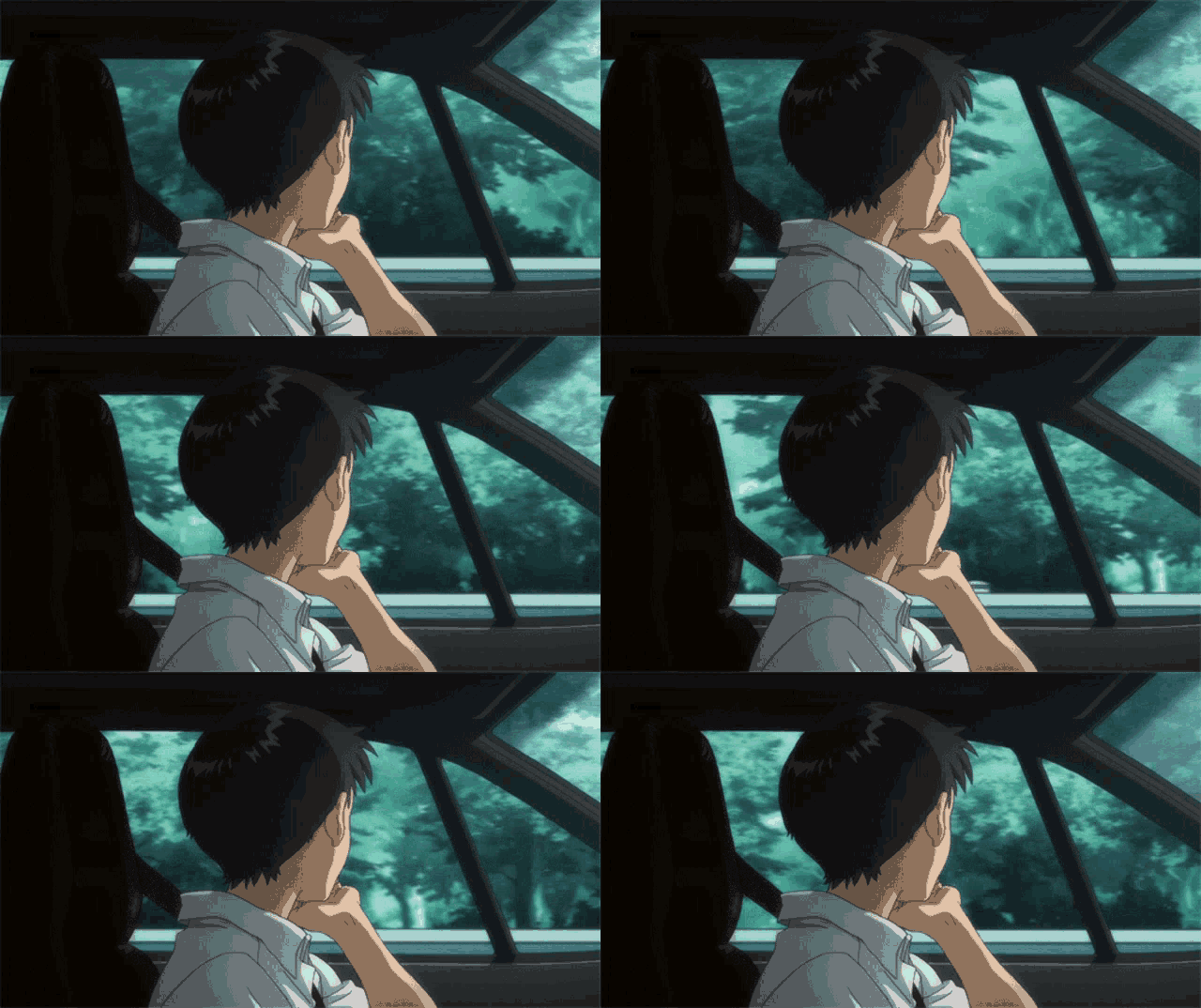
It wasn’t until I was quite a bit older and both of my grandparents passed away that I begun to see the quaint charm of non-urban life. A life marked by hard work and grit, where creation nurtured creation through the day, and nights opened into a sea of stars and against an unbent sky.
I’d aim my flip phone camera to try to capture the moment, to take time hostage, but to no avail. The moment would slip away and I’d stare into a blurry aperture of something that was never meant to be contained in the first place.
So I stopped trying. It was a willful surrender, an act of homage to the here and now that loosened my grip, freeing my hands from the futile attempt to wrest nature into my possession, my control.
I noticed the horses grazing in the prairie, the Meadowlarks’ song carried on the wind, the honest scent of pine and hay and cow manure. There was a charm here, and slowness of life foreign to the idolatry of efficiency in the city. A recognition of the importance of a day’s work and the family gathering for a warm meal at the dinner table each evening.
A recognition that nothing lasts forever, and neither will we. A flicker of flame, a breath a fading moment. A gratitude understood by those who live close to the soil. To love God with all our hearts, to give thanks for another day together, and to hold one another a little closer knowing there will come a day when we know longer can.
I think that is what the passage of time does to us. It unravels the illusion that anything can be held forever. We spend our younger years trying to bottle light, preserve beauty, outrun loss. We deny ourselves of the present by hoping for the future, all while time keeps up its steady pace.
It moves forward impassively, while we struggle to find our bearings in its trail of dust.
Might as well cherish it while we still have time.
Tempus edax rerum.
Time, the devourer of all things.
Yet beauty is a persistent flowing state.
It isn’t trying to be, it simply is.
It flourishes and is abundant, it gives existence a spirit and life vibrant texture. It is the embodiment of mercy and it is a gift that should be treasured.
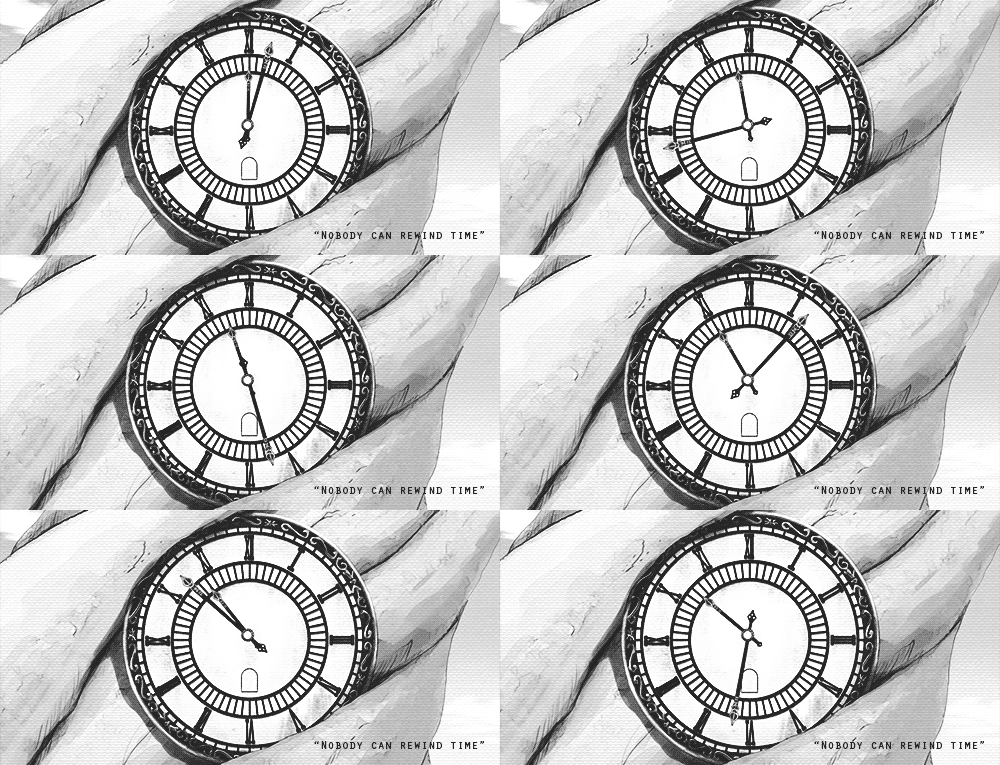
You see, God did not have to create beauty. He could have merely set the world in motion, like cogs of an old tower clock. Everything timely and predictable, a life measured not by depth but by rhythm, not by wonder but by mechanism.
It was mercy that dipped the brush into color, filling the void with beauty where utility alone would have sufficed. It was willful intention. Divine intervention. Every sunrise, every wildflower, every note of birdsong became the signature of the Artist upon His canvas, inviting us to recognize His image reflected in ourselves. Our longing to create was never an accident; it was only the very mark of the Creator whose likeness we bear. The one who really can bring about something from nothing, beauty from the void.
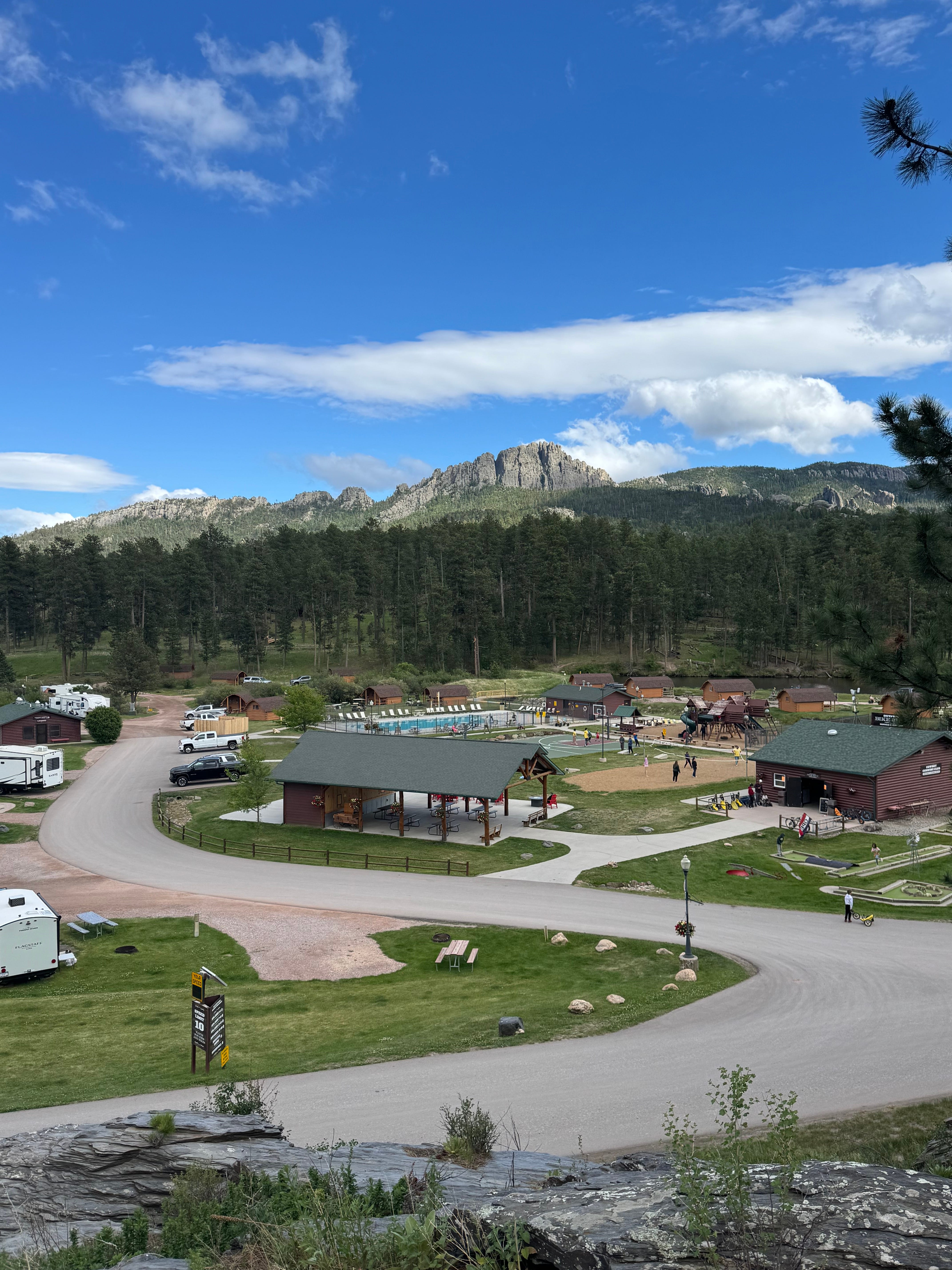
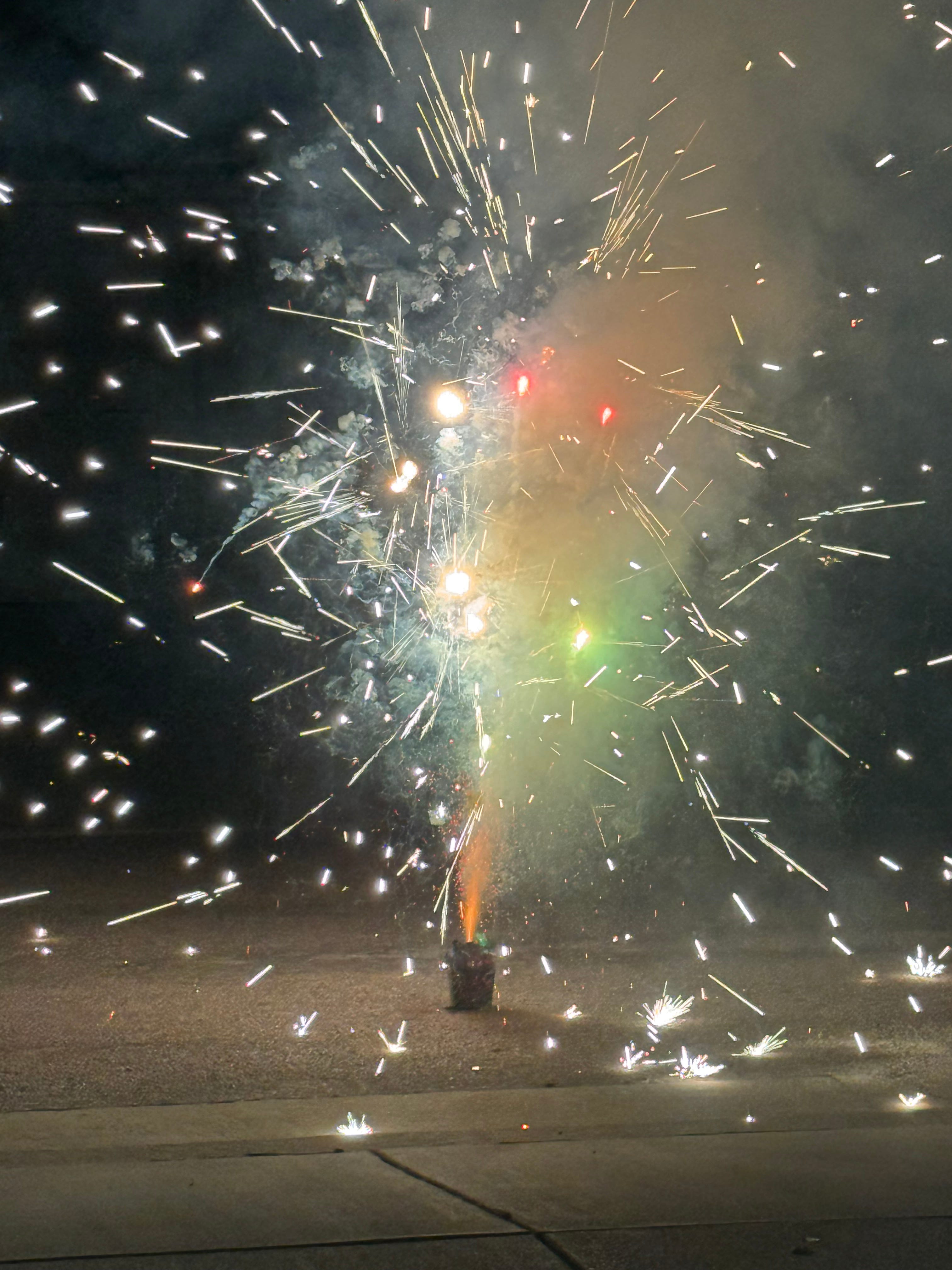
I stood facing west on our country’s 250th name day from the overlook of our cabin in the Black Hills. There were American flags below us and fire pits burning in the dark. Bottle rockets hissed upward and broke open over the trees. For a moment there was light. Then there was smoke and darkness again. Below, a group of young boys staged a Wild West impasse, their hands trembling over the holsters of their popguns until one finally shouted, “Draw!” Then came the crack of their toy pistols, echoing into the dusk as running and laughter resumed.
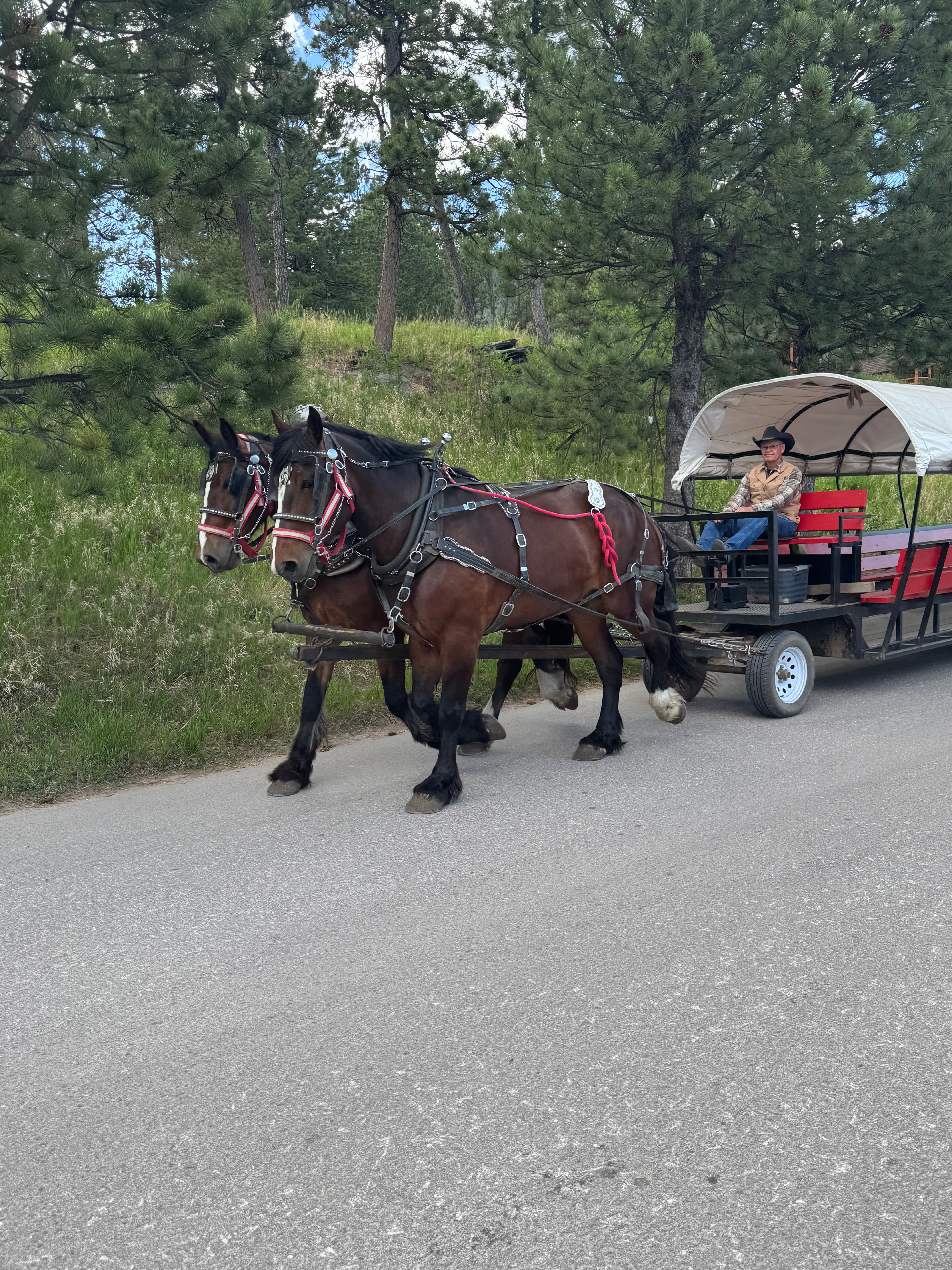
The click-clack of hooves on gravel turned my gaze toward a caravan of carriages pulled by Clydesdales. The passengers smiled as they passed, enjoying the attention from those gathered along the road. The drivers seemed to enjoy it too, often tipping their top hats to passersby, a smirk tracing their lips.
A curious realization hit me then, how beauty persists, I mean.
it cannot be forced.
You cannot will beauty into existence no more than you can will for the rain to fall. It shows up in its time and leaves when it pleases. It does not care for any recognition or acknowledgement, and cares not for appraise.
It simply is there for those to see, should they go looking for it.
I wonder how often we miss it, are too caught up in earthly distractions and future ambitions to actually behold its presence. It is made beautiful in its transience and so are we, after all.
Here for a second, gone the next.
The very thought makes our stomachs turn. I know of no one who enjoys the thought of time passing. Of years slipping away, one day at a time, each day bringing us closer to the end of the final chapter of our earthly existence.
It is perhaps the most powerful fear — and motivator — we have. It can drive us to accomplish our wildest dreams or send us spiraling into an existential crisis. The same awareness that compels us to live can also remind us that, one day, our living will end.
It wasn’t until I was older to fully understand it.
The gift of the here and now, the present moment.
Carpe Diem—
Seize the day.
I’ve found I really don’t need much to be happy anymore.
I like to spend a few minutes with God before the dawn and to listen to the warble of finches beckoning the gift of the new day. I like my coffee black in the morning and to see the sunrise. I like hearing the pitter-patter of small feet when my kids get out of bed and come to the table for breakfast. I like spending my days with my family and spending less time looking down at my phone.
I like the quiet life.
The slow life.
The intentional life.
I understand it now.
The country never changed.
I did.
I used to think happiness was found in having more to do, more to see, more to consume. I thought the city was full of life because it was full of noise.
But life was here all along.
The gravel beneath the tires. The smell of pine and hay. The first birdsong before sunrise. The laughter of children and the warmth of a family gathered around a table.
In the things that cannot be held, bought, hurried, or kept.
Beauty was never something I needed to capture.
It was something I needed to finally see.
And perhaps that is what growing older really gives us: not more time, but a greater appreciation for the time we have.
The sun rises.
The birds sing.
The coffee gets cold.
The children grow.
And another day disappears behind us.
So I will try to be here for it.
For as long as I can.
For this moment.
For this beautiful, fleeting, unrepeatable gift.
Here.
And now.


Aww, so well spoken - I don't even have words.
Profound, as always.