
A Change in Badge.
On Chaplaincy, Nursing, and a Faith Forged in Suffering


The question I get asked most often by others is, “Why, if you were so passionate about chaplaincy, did you choose to go into nursing?”
And I do understand the inquiry behind the words, the silent skepticism that looks into my eyes, searching for a reason that makes sense of it. After all, much of my writing here is focused on sharing stories of the sick and dying, both as a means of processing the grief I carry while also carefully memorializing those I never wish to forget, a memento of sorts.
And yet, at the turn of the new year in 2025, I resigned from my job as a hospice chaplain to began full-time, intensive accelerated nursing school. It was intense, and quite honestly the most radical life change I have ever made.
In Bible school and seminary, I never learned the sciences. In fact, the only sciences that I had taken up to that point were the bare minimum “General Education” classes required to be enrolled at the university, comprising of General Biology and Introduction to Chemistry.
I almost failed both.
It wasn’t due to effort I assure you, I simply loathed science. Hated it. Dreaded every second of it. The smell of formaldehyde and solvent vapors pungent enough to make my nose hairs curl and the homework comprised of cheap plastic balls and pegs resembling molecules and compounds.
Wasn’t my thing.
But in theology class, I found papers and expressing my thoughts in word to be the most natural thing in the world. I doted over biblical exegesis and hermeneutics and richly enjoyed learning from esteemed professors both locally and internationally. It felt like a rather unique little subsect of Academia that I never wished to leave.
The problem was, I felt no inclination to preach.
Even chaplaincy did not begin with a grand calling, but with a suggestion, an inkling. A professor told me he thought I might make a decent chaplain and, in the pouring rain, walked with me three blocks to the hospital to meet the Director of Spiritual Care. What felt incidental at the time, I now recognize as providential. That is where my professional ministry began.
And frankly, I loved it.
I met interesting people and I listened to interesting stories. In many ways, chaplaincy felt like the truest representation of scriptural ministry: leaving the pews and the familiar to minister to the world. In the hospital, I was placed in the front row of countless lives, each unique in circumstance yet equally loved by Jesus.
I was paged to traumas and strokes and people who just needed a warm hand to hold as they prepped for a procedure. I watched new life come into the world and other life depart from the world in succinct procession, sometimes all within the very same shift.
I was an integral part of a interdisciplinary care team, a unit of spiritual care professionals, all with our own subsect of responsibilities, encounter objectives, and outcomes.
It was soul-sucking work, tending to the suffering.
And I’m convinced that when you witness the cruel, cold, unabridged totality that death brings, it changes a person. It changed me.
I entered the profession with the inclination that my role was more akin to a spiritual cheerleader or a hyper-evangelist — that if I had my three-point spiel on conviction, God’s love, and repentance prepared, I could somehow fix everyone in the hospital.
My faith crippled the day I witnessed my first death, a lady in her 40’s who suddenly coded right in front of me when I was still on orientation. I’ll never forget hiding myself in the shadow behind the chaplain preceptor, my hand firmly placed on my own beating heart to remind me that I was still alive.
When I left the profession, I left changed. So did my faith. It was no longer a castle made of glass that I had to defend from the battlements, fearing that doubt or opposing philosophies might cast their stones and shatter the whole thing. What I had developed instead was a faith forged in suffering, a faith able to endure resistance and the forces of the night.
My faith was built on the living, breathing Jesus, who suffered brutally yet persisted evermore in Hope.
It was as though my eyes could see for the first time the real faith. The faith that was not mine to defend but would persist solely on its own weight. The faith that would equip me to withstand the depths of depravity and ache without ever threatening its integrity.
So why did I leave chaplaincy?
Ready for the anticlimactic part?
I really don’t know.
Truthfully, I wanted more of healthcare and sometimes felt as though I wasn’t in all the rooms that I wanted to be in. I felt that there were more patients who would benefit from spiritual care than those that I was seeing.
I noticed a stigma around chaplaincy where people couldn’t quite grasp when, or if they ever should, ask for a chaplain. I was in the rooms of many Jesus-loving, bible-professing believers, when often only next door someone who was facing true doubt and longing for meaning would decline the conversation.
Sometimes I felt it was the badge I wore that prevented me most from getting into the rooms that would benefit from grief counseling and spiritual care.
People thought I was there to preach at them. To teach them something. To force them into a faith that was foreign to them. To remind them of past church hurt and trauma. When in reality, my role was to listen. To hold. To love. To embody the Hope I claimed, not only through words, but through posture.
And truthfully, I saw nursing not as a change in vocation, but merely a change in badge. I didn’t long to preach or work within a church. I felt a deep calling, a burning desire to be in healthcare. I longed to grow in my knowledge of anatomy and physiology and the intricacy of God’s design of the human body. I wanted to learn new skills that might benefit others within and outside of, the hospital.
My leaving was never a rejection of chaplaincy, but an expansion of how I felt called to serve.
I hope to serve well, regardless of the title on my badge.
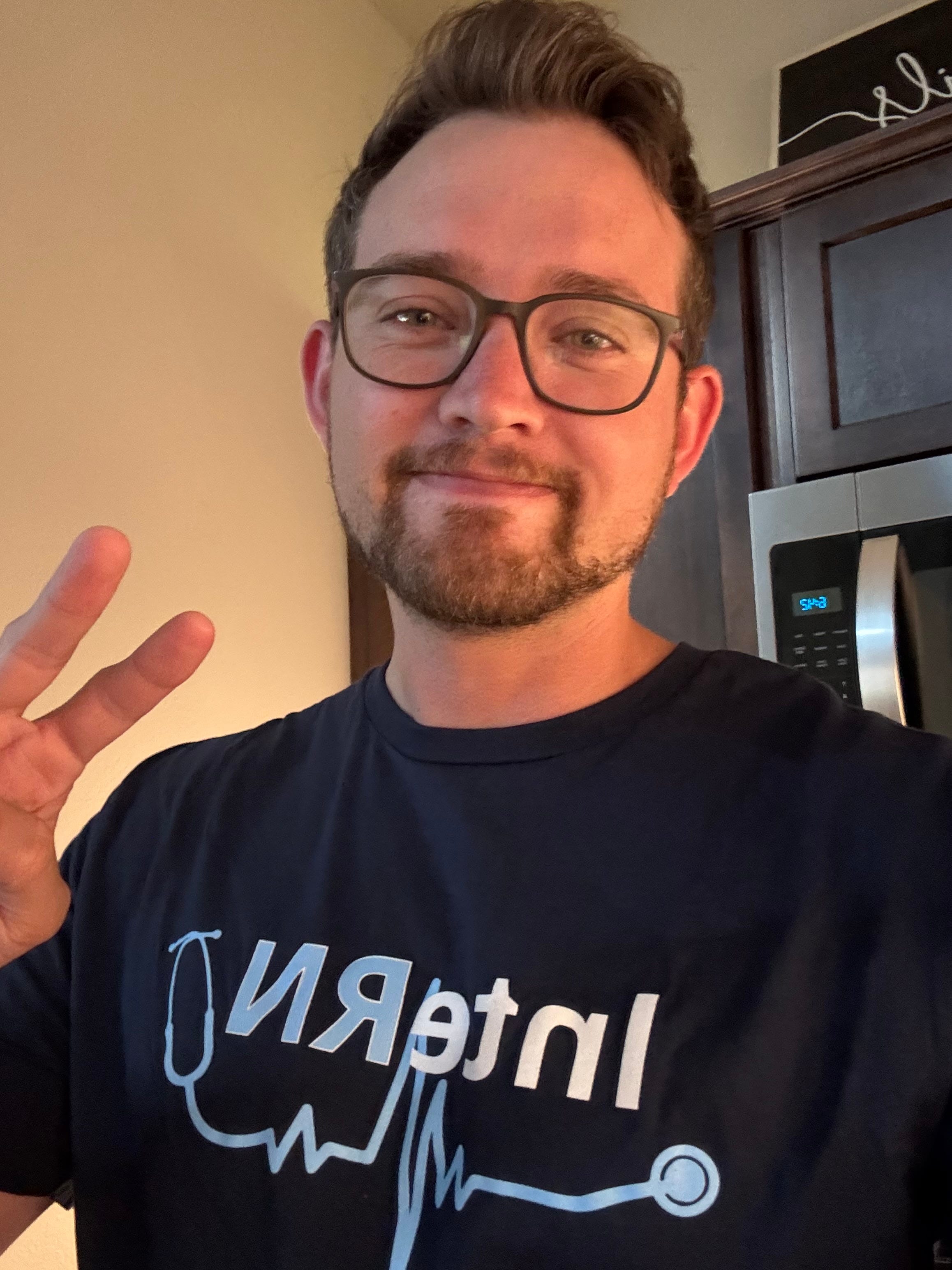
To my chaplain colleagues and friends, thank you for what you do. You embody the presence and love of Jesus in tangible ways, offering vital care that supports healing in the midst of hospital darkness and despair.
I hope to serve as a chaplain in a renewed way; carrying forward the wisdom and vision of those who have gone before me. I hope to do it well, as a testament to the patience and grace shown to me when I struggled and nearly lost my faith.
May I honor you faithfully, dear chaplains. Yours is often one of the hardest callings, offering hope day after day in the face of what you witness. I pray you receive the support and encouragement you need, for you carry light in places that can feel exceedingly dim.
Other Recent Posts:
The Edge of Hope.

There are many stories from the hospital that I still carry with me, stories of grief, of loss, and of hope manifesting in the unlikeliest of places.
Why Influencer Status Probably Won't Save You.

I recently read a statistic that said 5.41 billion people (roughly 65.7% of the entire population) are on social media of some kind. And while that doesn’t specifically indicate the platform or utility of the medium, I don’t think I need to explain to you just how prevalent social media has become in our world.
Devon, you remind me a lot of Mother Teresa of Calcutta, one of my heroes who died in 1997 and who was canonized a saint during Pope Francis’ pontificate. I encourage you to check out some of her writings. Now, she is a devout Catholic, so there are some things in her writings that you won’t agree with, but there are some remarkable similarities between her story and yours. She felt called by God to leave the Sisters of Loretto and give her life to serve Jesus in the poorest of the poor in the slums of Calcutta, and part of that actually involved basic medical training as part of her preparation. She considered it to be her “call within a call”, and your new apostolate sounds like a “call within a call” as well.